
A subtle design with maximum sense of space
How Infinity enhances space without compromise

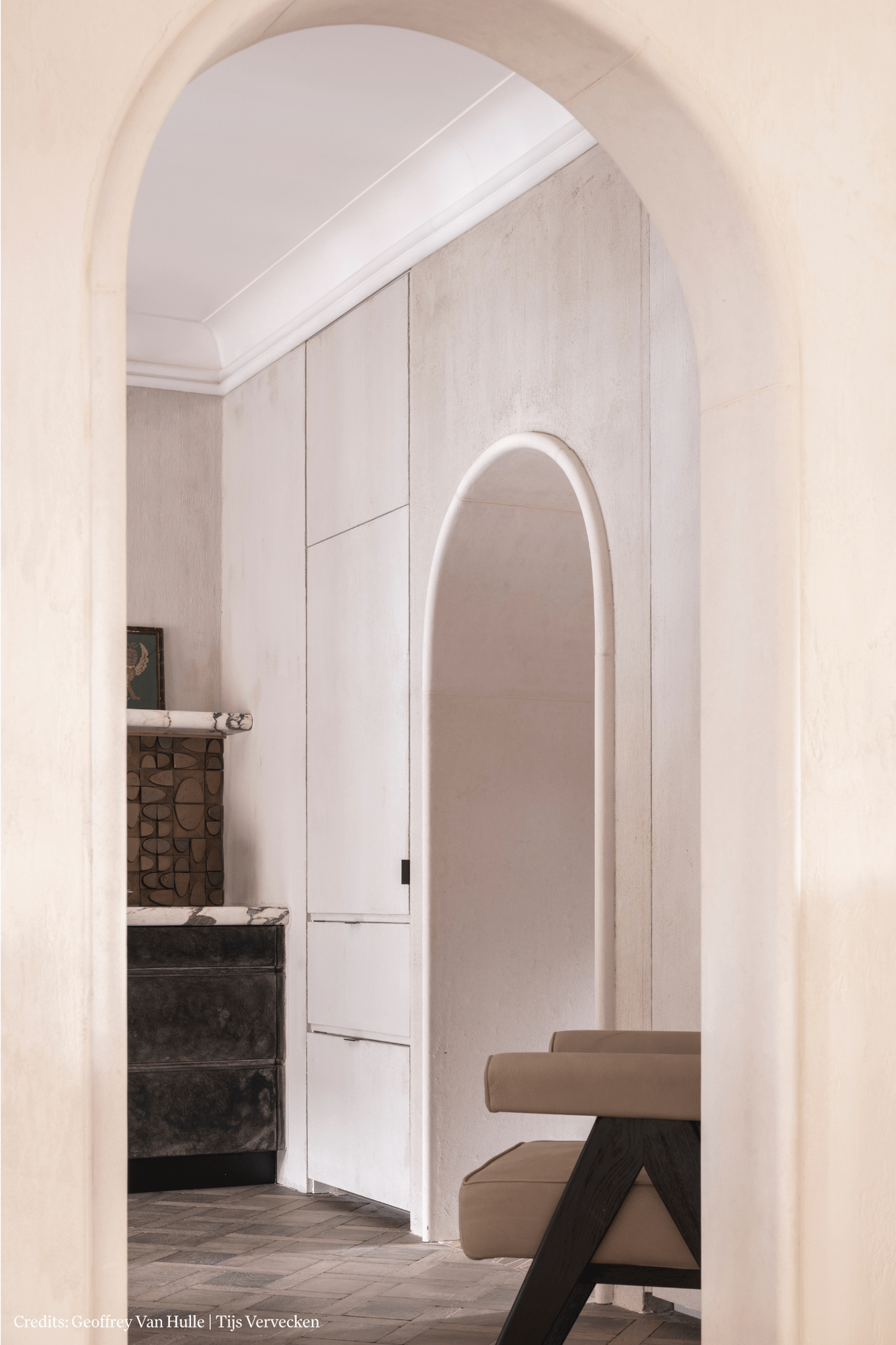
The transition between wall and ceiling often receives attention late in the design process, even though this line strongly determines how a space is perceived. Depending on the design intent, a cornice can be prominently present, with volume and detailing, or more restrained, allowing space and light to speak.
This fluid, organic transition is difficult to achieve with traditional materials such as plaster or wood. The complex curve requires intensive customization, adds weight, and often comes with higher costs. Infinity provides a well-considered alternative: a lightweight, perfectly shaped profile that enables the same soft transition without technical limitations.
With the Infinity family, we offer a solution for the latter scenario. Instead of sharply defining the corner, it is softened and opened up. The line between wall and ceiling is, in a way, lightened, making the space feel calmer and more spacious.
A remarkable aspect is the reversed design logic: the larger the profile, the stronger the sense of space can become. Thanks to its asymmetrical shape and soft curve, the volume is not perceived as heavy, but rather contributes to a more open overall feel—even in compact spaces.
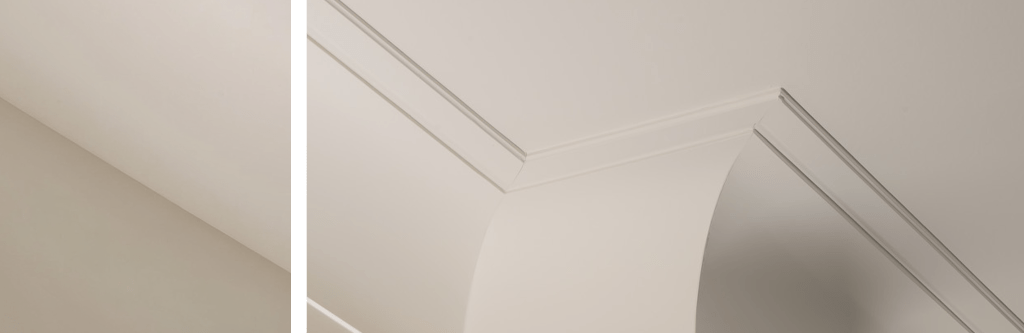
When the corner defines the space
In compact rooms, a sense of space is not a given. Elements that add visual weight immediately affect the perception of height and openness. Traditional profiles often create a clear, sharp transition. In some designs, this is intentional. In others, it can visually limit the space. The Infinity line starts from a different logic. The C-shaped curve and ultra-thin edges allow wall and ceiling to flow into one another, making the space feel more open and serene.
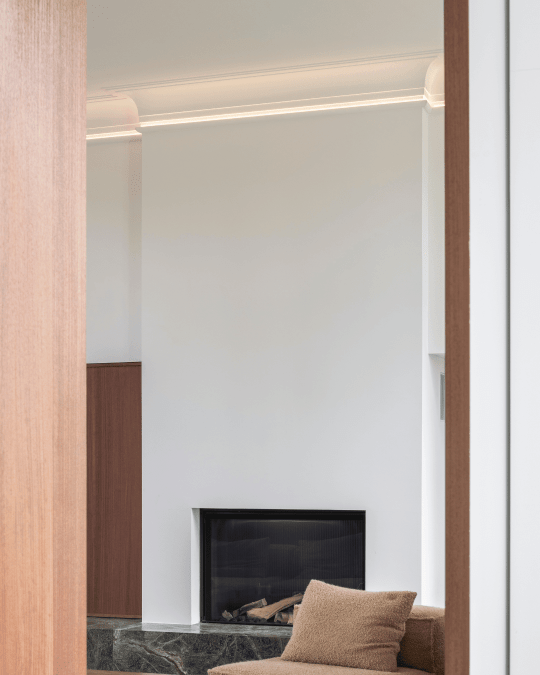

Asymmetry as a tool to shape space
One of the most distinctive features of Infinity is the asymmetrical structure of the profile. This asymmetry allows the ceiling line to be actively used as a design tool. Depending on the placement, the same profile can create a different spatial effect. When applied traditionally as a cornice, it emphasizes the horizontal line of the room, making it feel wider. In a reversed application, the emphasis becomes vertical, making the ceiling appear higher. Without structural interventions, Infinity gives designers more control over proportions and spatial perception—a subtle yet powerful intervention.
Integration as the key to calm
Contemporary interiors increasingly combine multiple functions: indirect lighting, curtain systems, and technical integrations. When these are solved separately, it often leads to visual fragmentation and more complex detailing. Within the Infinity family, these functions are brought together. One profile can serve as a cornice, LED solution, and curtain profile, keeping the line uninterrupted. The curved shape also contributes to a soft, even light distribution. .
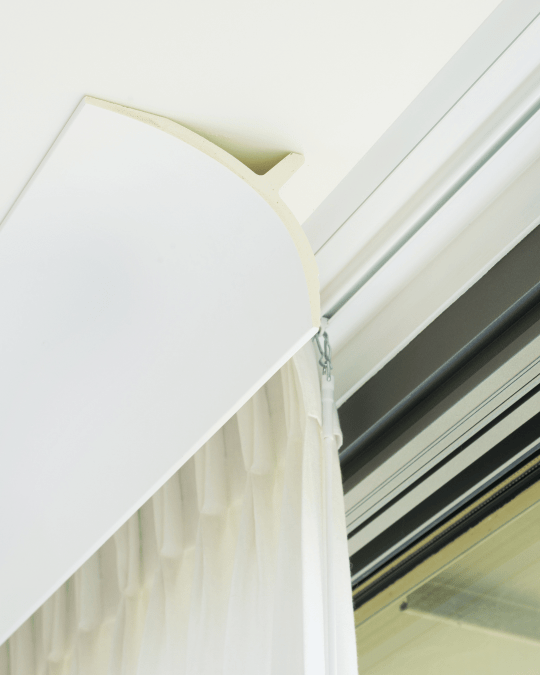

One product, multiple formats
Architectural consistency is essential, especially in projects that span multiple spaces. The Infinity line makes it possible to extend one product family across residential, hospitality, and office environments. Thanks to the wide range of sizes (from subtle to expressive), proportions always remain in balance with the scale of the space. Even in larger dimensions, the profile remains lightweight, refined, and easy to install, making it practical for larger projects as well. The range varies from subtle profiles of 10 cm to more expressive formats up to 40.5 cm in height, giving designers maximum freedom in scale and impact.
A solution that adapts to every style
The strength of Infinity lies in its neutrality and versatility. Thanks to its soft, organic form, the profile adapts effortlessly to different interior styles—from sleek modern to classic and more expressive styles such as Art Deco. Infinity can be used on its own as a subtle line, but it is equally effective when combined with other Orac products. By combining profiles, a unique design emerges that plays with rhythm, detail, and character.
A single cornice can thus take on different expressions:
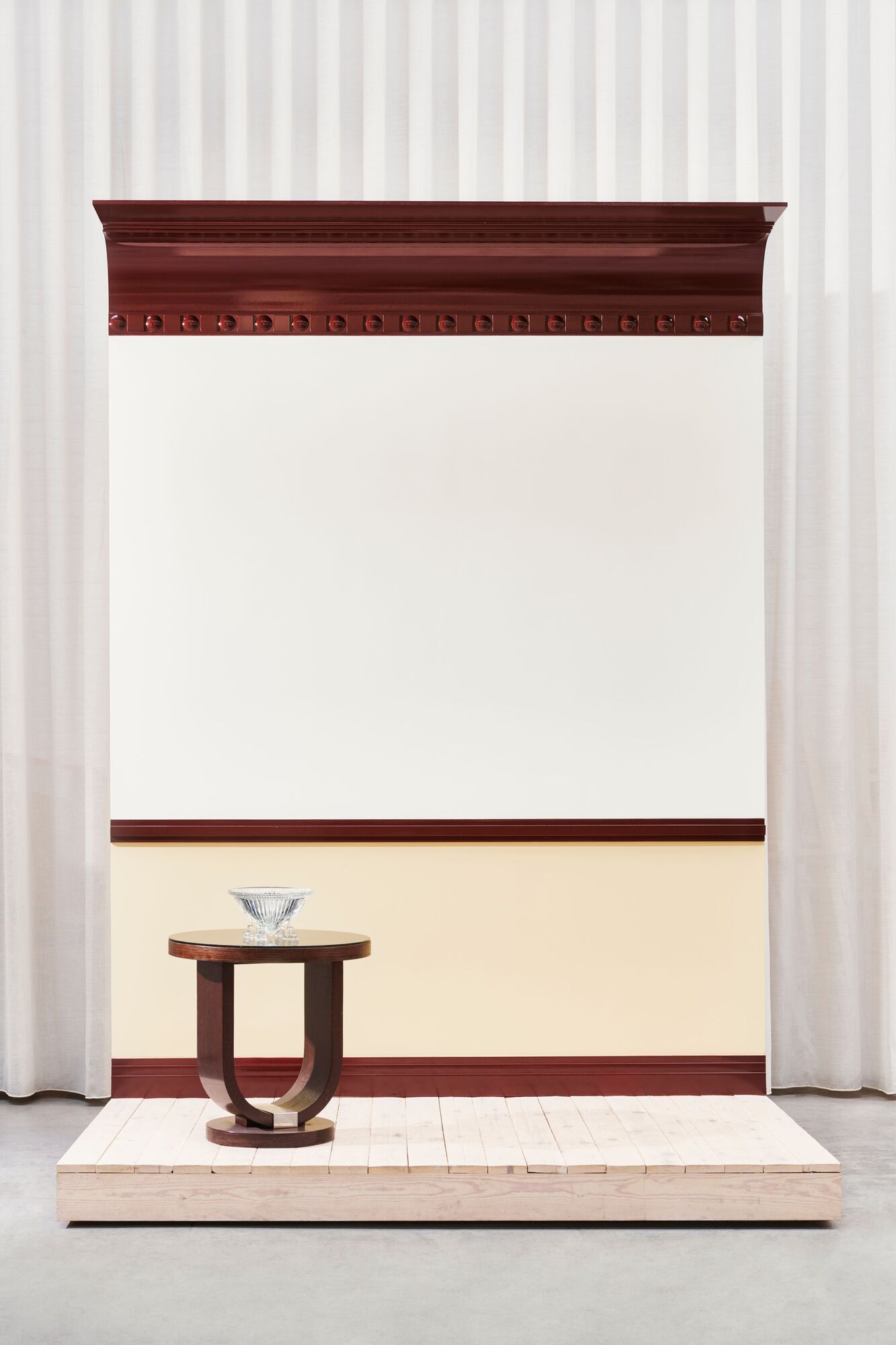
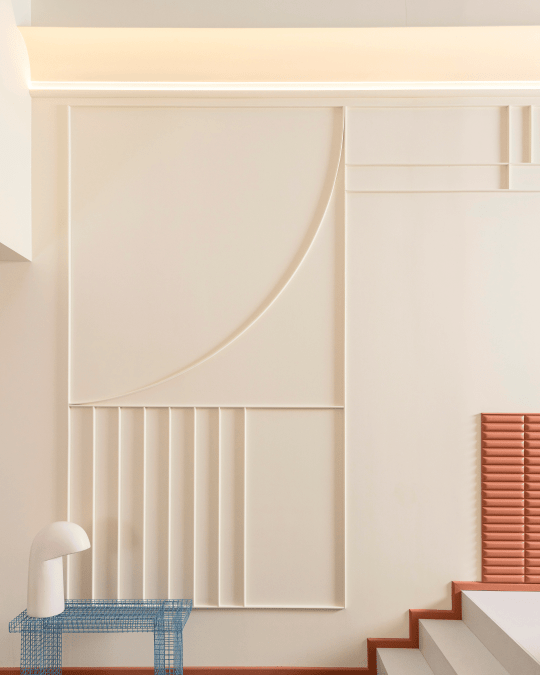
In an Art Deco interior by combining it with a pronounced wall moulding
(C990 combined with P9900 and skirting SX180)
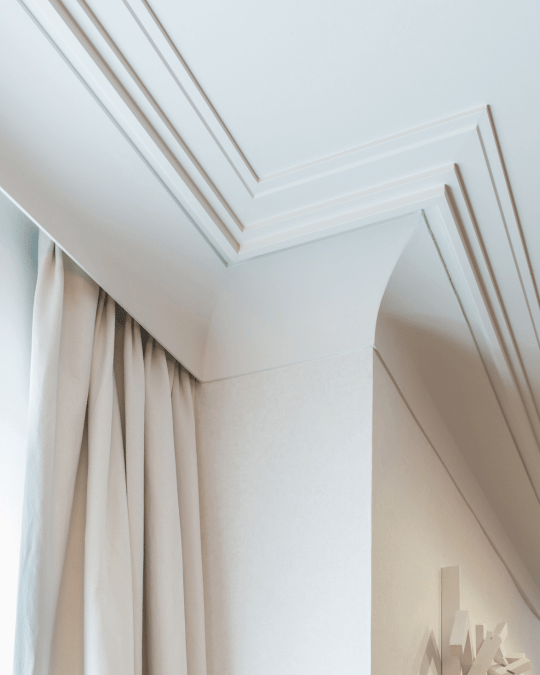
– In a classic concept by adding rhythm and repetition through additional profiles
(C990 combined with CX188, applied twice)
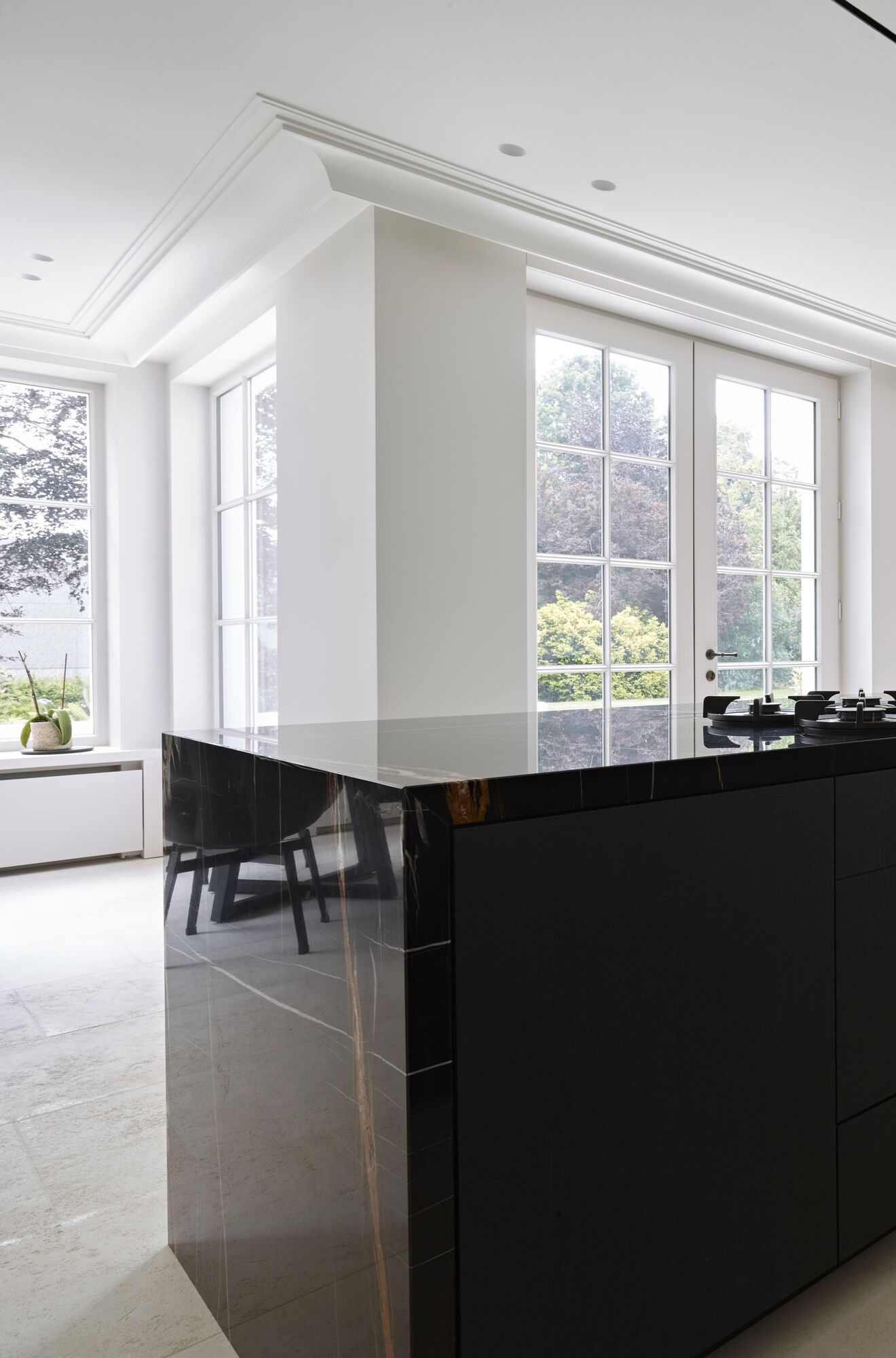
– In a modern design by reinforcing clean lines and simple volumes
(C991 combined with C355)
More than a cornice
Beyond its aesthetic value, practicality also plays an important role. The ceiling corner is often a point where technical and construction challenges come together. Infinity helps address this by subtly concealing cables, small pipes, or irregularities within a timeless design. What appears at first glance as a finishing element also becomes a solution. By closing small gaps between wall and ceiling, a cornice can even contribute slightly to reducing heat loss—a subtle detail that can make a difference within a well-considered whole.
A conscious choice based on space
Since the introduction of the first Infinity profile in 2008, the range has grown into a versatile system addressing a wide variety of design challenges. Infinity does not replace other solutions but adds a specific design approach—one where spatiality and soft transitions take center stage. For designers, this means not fewer choices, but more control over how a space feels, moves, and is experienced. .